
Why Las Vegas Homeowners Are Choosing Travertine Over Concrete
June 15, 2025 · FreshStart Landscaping Vegas
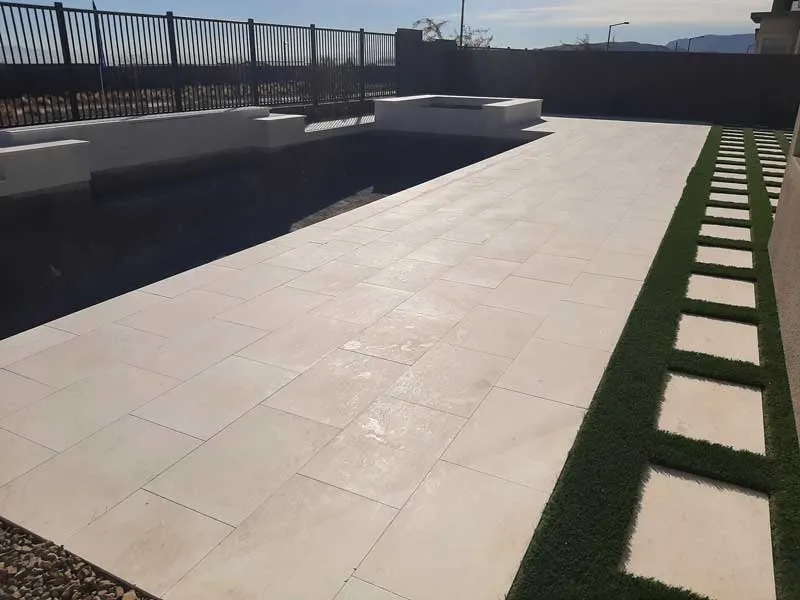
Discover why travertine outperforms concrete in Las Vegas backyards — from heat resistance and safety to resale value and desert durability.
Why Las Vegas Homeowners Are Choosing Travertine Over Concrete
When it comes to paving your Las Vegas backyard, the choice of material matters more than it does almost anywhere else in the country. Our desert climate — with triple-digit summer temperatures, intense UV exposure, and dramatic temperature swings — puts outdoor surfaces through a punishing test year after year. While concrete has long been a go-to option for patios and pool decks, more and more Southern Nevada homeowners are making the switch to travertine. Here's why.
Heat Performance: A Real Difference You Can Feel
One of the most compelling reasons to choose travertine in Las Vegas is how the material handles heat. Concrete surfaces in direct desert sun can reach temperatures between 140 and 160 degrees Fahrenheit — hot enough to burn bare feet and make outdoor spaces unusable during the hottest parts of the day.
Travertine, by contrast, stays significantly cooler. The stone's natural air pockets and light, reflective coloring mean it absorbs far less solar radiation than concrete. On a 110-degree summer day, a travertine patio can feel 30 to 40 degrees cooler underfoot than a concrete equivalent. For families who want to actually use their outdoor space in the summer — not just look at it — that difference is transformative.
Desert Durability That Outlasts Concrete
Concrete may seem sturdy, but it has a difficult time with the specific combination of stressors Las Vegas throws at it. Extreme temperature swings — from summer highs over 115°F to winter nights that dip below freezing — cause concrete to expand and contract repeatedly, leading to cracking and surface degradation. Monsoon rains can accelerate the damage, and the mineral-rich soil common in the Las Vegas Valley can cause staining and surface etching over time.
Concrete patios typically require refinishing, sealing, or replacement every 7 to 15 years. Travertine, a natural limestone formed over millions of years under pressure, is built for the long haul. With proper installation and minimal maintenance, a travertine patio can last 50+ years. That's a fundamental difference in value.
Safety Around Pools and Wet Areas
If your patio surrounds a pool or spa, surface texture becomes a safety issue, not just an aesthetic one. Concrete, particularly when sealed, becomes slippery when wet. Travertine's natural porosity creates a slip-resistant texture that provides better traction for wet feet — an important consideration for families with children or elderly relatives.
Resale Value in the Las Vegas Market
Real estate agents and appraisers consistently report that premium outdoor hardscaping adds meaningful value to Las Vegas homes. In a market where outdoor living spaces are heavily weighted in buyer decisions — especially in master-planned communities like Summerlin, Skye Canyon, and Henderson — a well-executed travertine patio is a selling point, not just a personal preference.
A travertine upgrade that costs $20,000 to install can return $25,000 to $35,000 in increased home value at the time of sale, depending on the neighborhood and the quality of the installation. That's a meaningful return compared to concrete, which buyers often view as a baseline expectation rather than a premium feature.
Cost Comparison
The upfront cost difference between travertine and concrete is real. Concrete typically runs $8 to $12 per square foot installed; travertine ranges from $18 to $28 per square foot depending on the stone grade and project complexity. However, when you factor in concrete's shorter lifespan, the cost of refinishing or replacement, and travertine's long-term resale value benefit, the total cost of ownership over 20 to 30 years often favors travertine.
HOA Considerations in Las Vegas
Most master-planned communities in the Las Vegas Valley — including Summerlin, Skye Canyon, Seven Hills, and MacDonald Ranch — maintain architectural review processes for backyard improvements. The good news is that travertine is almost universally viewed positively by HOA review boards. Many communities in fact require or strongly prefer natural stone materials over poured concrete for premium outdoor renovations. If you're in an HOA, your FreshStart project manager can help you navigate the approval process.
Color and Finish Options
Travertine is available in a wide range of tones that complement Nevada's desert palette: ivory, silver, walnut, noche, gold, and cream. Surface finishes include tumbled (rustic, slightly rounded edges), honed (smooth and matte), and brushed (textured with a natural feel). The variety of options makes it easy to match existing exterior colors, complement your landscaping, or create a specific aesthetic — modern, Mediterranean, or classic Southwest.
Choosing the Right Installer
Not all travertine installations are created equal. The material requires proper substrate preparation, precise drainage grading, and correctly spaced joints to accommodate Nevada's temperature extremes. When evaluating contractors, look for a verified Nevada contractor license, liability insurance and worker's compensation coverage, a written material and installation warranty, and references from completed travertine projects in the Las Vegas area.
FreshStart Landscaping is a fully licensed and insured Nevada contractor (License #0092099) with extensive travertine installation experience throughout the Las Vegas Valley. If you're ready to explore whether travertine is the right choice for your yard, contact us for a free consultation.
FreshStart Landscaping — 8617 Stone Harbor Ave, Las Vegas, NV 89145 — (725) 305-1220
Ready to Start Your Project?
FreshStart Landscaping serves Las Vegas, Henderson, North Las Vegas, and all of Southern Nevada. Contact us for a free consultation and quote.