
What Is This Crushed Rock Used In Las Vegas Landscaping Called DG?
July 10, 2025 · FreshStart Landscaping Vegas
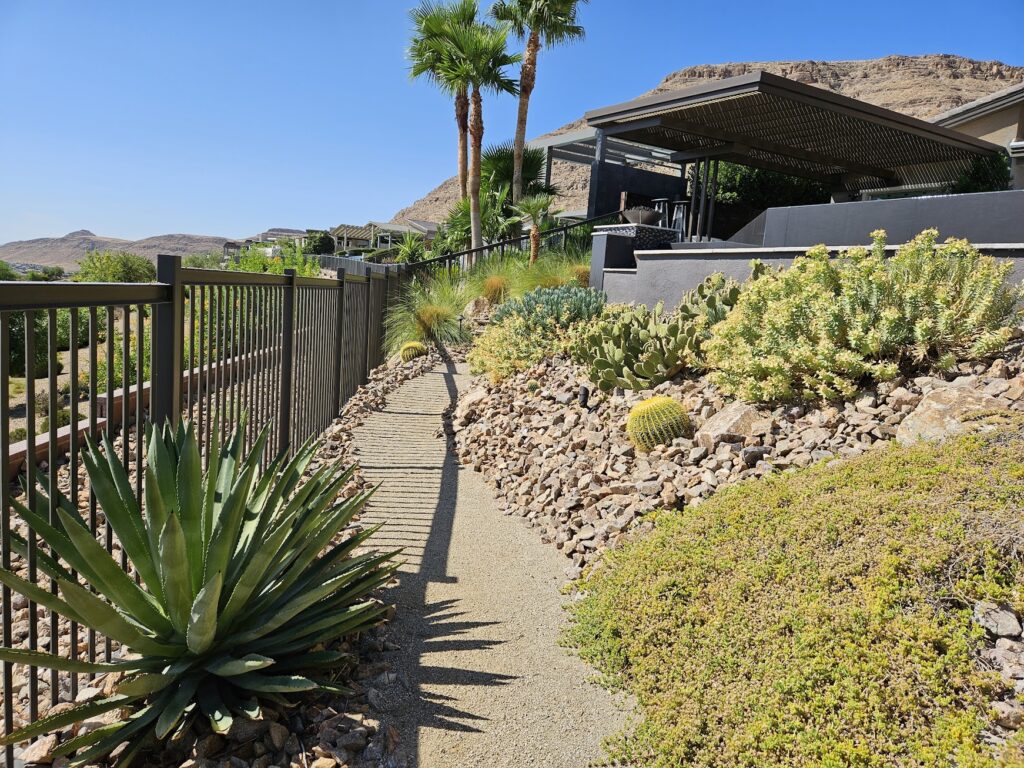
Decomposed granite (DG) is one of the most popular landscaping materials in Las Vegas. Learn what it is, why it works in the desert, and how to use it in your yard.
What Is Decomposed Granite (DG)?
If you've spent any time looking at Las Vegas yards and desert landscaping, you've almost certainly seen it — that crushed, gravelly material spread across the ground in sandy brown, gray, or reddish tones. It's everywhere in Southern Nevada, and for good reason. That material is called decomposed granite, or DG, and it's become one of the most popular landscaping ground covers in the region.
Where Does DG Come From?
Decomposed granite is exactly what its name suggests: granite that has naturally broken down over time. Through a gradual geological process, large granite rocks slowly weather and fracture into smaller and smaller pieces, eventually forming a fine mixture of small stones, pebbles, and fine mineral particles. The result is a material that retains the mineral composition and earthy tones of its granite origin but in a loose, workable form.
DG is naturally occurring and abundant throughout the American Southwest, which is part of why it's so cost-effective for Las Vegas landscaping projects.
What Does DG Look Like?
The texture of decomposed granite can range from a fine, almost sandy consistency to a coarser gravel-like material, depending on how far along the decomposition process the granite has traveled. In its most common form used in landscaping, DG has a crumbly, slightly gritty texture that compacts moderately well underfoot. Colors range from warm sandy tans and golden browns to grays and pinkish-red tones, all of which blend naturally with the desert environment surrounding Las Vegas homes.
Why DG Is So Popular in Las Vegas
Water Conservation
Las Vegas receives an average of about four inches of rain per year, and water conservation is both an environmental imperative and, increasingly, a legal requirement. DG requires no irrigation — it's dry material by nature. Used as a ground cover, it creates dry, beautiful landscapes that consume no water while still providing visual texture and color that bare dirt cannot offer.
Low Maintenance
Unlike grass, DG requires no mowing, trimming, fertilizing, or pest management. Occasional raking to redistribute material displaced by wind or foot traffic is typically all the ongoing maintenance required. Weed growth can be minimized by installing a permeable weed barrier fabric beneath the DG layer.
Affordability
DG is one of the least expensive landscaping materials available. The material itself is inexpensive, delivery and installation costs are reasonable, and there are essentially no ongoing material costs. Compare that to maintaining a grass lawn or a water-intensive garden, and the long-term cost savings are substantial.
Desert Durability
Because DG is composed of igneous rock material, it holds up exceptionally well in Las Vegas's extreme heat. It doesn't melt, warp, fade, or deteriorate in triple-digit temperatures. The material is as native to desert environments as the cacti and agave plants that often accompany it in landscape designs.
Common Applications for DG in Las Vegas Landscaping
Pathways and Walkways: Compacted DG creates stable walking surfaces for garden paths, side yards, and walkways. A stabilized version (DG mixed with a binder) creates even firmer paths that hold their shape better under foot traffic.
Patio Areas: For low-key outdoor spaces or areas adjacent to formal hardscape, DG provides a natural transition zone.
Driveways: In rural or semi-rural settings, DG makes an excellent driveway material — permeable, dust-resistant when compacted, and attractive.
Ground Cover: The most common use in Las Vegas yards is as ground cover replacing grass or bare dirt. Combined with desert plants, boulders, and decorative rock, DG forms the foundation of a classic desert landscape design.
Garden Mulch: DG can serve as a mulching material around desert-adapted plants, helping to retain soil moisture while maintaining a clean, finished appearance.
How Is DG Installed?
A proper DG installation involves several steps:
Site Preparation: Existing vegetation is removed, and the ground is graded to ensure proper drainage away from structures.
Weed Barrier Installation: A permeable landscaping fabric is installed to suppress weed growth without blocking water drainage.
DG Application: The material is spread across the prepared area, typically in layers 2-3 inches deep.
Compaction: Light compaction, either by foot traffic or mechanical means, helps the DG settle into a more stable surface.
Edge Containment: Metal or plastic landscape edging is typically installed to keep DG in place and prevent migration onto adjacent surfaces.
DG vs. Other Ground Cover Alternatives
Las Vegas homeowners sometimes compare DG to other popular options:
Crushed Stone: More angular and durable than DG, crushed stone has a more formal look and excellent durability but tends to be more expensive and less comfortable underfoot.
Pea Gravel: Rounded and smooth, pea gravel is attractive in planting beds but shifts underfoot and is less suitable for walkways or high-traffic areas.
River Rock: Larger and more decorative, river rock is better suited as an accent material than a primary ground cover. It's more expensive than DG and less practical for large-scale coverage.
For most residential desert landscaping projects in Las Vegas, DG offers the best combination of cost, appearance, and low maintenance. If you're interested in incorporating DG into your yard design, contact FreshStart Landscaping for a free consultation.
FreshStart Landscaping — 8617 Stone Harbor Ave, Las Vegas, NV 89145 — (725) 305-1220
Ready to Start Your Project?
FreshStart Landscaping serves Las Vegas, Henderson, North Las Vegas, and all of Southern Nevada. Contact us for a free consultation and quote.