Replacing Your Grass In Las Vegas, NV With Artificial Turf: How to Choose The Many Options?
September 15, 2025 · FreshStart Landscaping Vegas
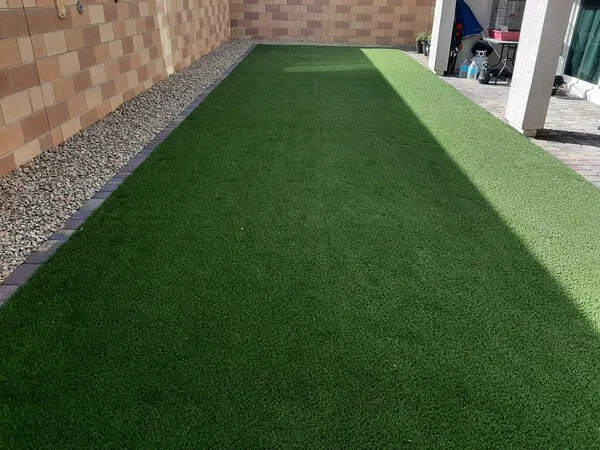
Switching from natural grass to artificial turf in Las Vegas? This guide covers everything from pile height and drainage to the different turf types available for residential and commercial use.
Replacing Your Las Vegas Lawn with Artificial Turf: A Buyer's Guide
For Las Vegas homeowners managing a natural grass lawn, the challenges are relentless: high water bills, scorching temperatures that stress the turf, constant maintenance demands, and now the legal requirement to remove non-functional turf by 2027. Artificial turf has emerged as one of the most popular solutions — but with dozens of products on the market, how do you choose the right one?
This guide covers everything you need to know before making a decision.
Why Artificial Turf Makes Sense in Las Vegas
Before diving into selection criteria, it's worth understanding why artificial turf is such a good fit for the Las Vegas climate specifically.
Water Conservation: In a city where outdoor irrigation accounts for roughly 70% of residential water use, artificial grass eliminates that consumption entirely. A typical Las Vegas lawn uses 50,000 to 80,000 gallons of water per year. Replacing it with synthetic turf saves that water immediately — and permanently.
Low Maintenance: Natural grass in Las Vegas requires year-round mowing, seasonal overseeding, fertilization, pest control, and regular irrigation management. Artificial turf requires occasional rinsing to remove dust and pet waste and periodic brushing to maintain pile upright position. That's it.
Extreme Weather Durability: High-quality artificial turf is engineered to withstand UV exposure and temperatures that would scorch and kill natural grass. Quality synthetic fibers resist fading and degradation even under Las Vegas's intense summer sun.
Year-Round Aesthetics: Natural grass in Las Vegas must be overseeded in fall to maintain appearance through winter, then transitions through a range of colors and conditions as the year progresses. Artificial turf maintains a consistent green appearance regardless of season or temperature.
Qualifies for Rebates: High-quality artificial turf installed according to SNWA guidelines qualifies for the Water Smart Landscapes Rebate Program, further offsetting the installation cost.
How to Choose the Right Artificial Turf
Factor 1: Intended Use
The first and most important selection criterion is how the turf area will be used. Different applications require different products:
General Residential Lawn: The primary requirement is aesthetics — the turf should look natural and feel comfortable underfoot. Moderate durability is sufficient for areas with normal foot traffic.
Pet-Friendly Areas: If you have dogs, look for turf specifically designed for pet use. These products feature antimicrobial coatings that resist odor-causing bacteria, perforated backing that allows urine to drain freely, and durable fibers that withstand digging and heavy use.
Children's Play Areas: Safety is the priority here. Look for products with adequate cushioning (either from the product's pile or from an installed pad underneath), non-toxic materials with no lead or heavy metals, and a texture that's comfortable for play.
Pool Surrounds: Drainage capability is critical around pools. Look for high-perforation backing that handles large volumes of splashed water, and textured fibers that provide slip resistance when wet.
Factor 2: Pile Height and Density
Pile height refers to the length of the synthetic fibers from the backing to the tips. For residential applications, a pile height of 1.5 to 2 inches typically offers the best combination of natural appearance and durability. Longer piles (2.5 inches and above) look lush but can mat down in high-traffic areas. Shorter piles (under 1 inch) look more like sports turf and less like a natural lawn.
Pile density — how many fibers are packed into a square inch — affects both appearance and durability. Higher density products generally look more realistic and wear better in high-traffic conditions but cost more.
Factor 3: Drainage Capabilities
Las Vegas receives most of its annual rainfall in brief but intense monsoon storms. Your artificial turf installation needs to handle sudden water volume without pooling.
Look for turf products with a perforated backing that allows water to drain through the turf and into the substrate below. The highest-quality products offer drainage rates of 30 or more inches per hour per square yard — far more than any realistic rainfall rate.
The drainage system beneath the turf (the crushed aggregate base) also plays a role. A proper installation includes a compacted base layer that promotes drainage rather than pooling.
Factor 4: UV Protection
This is non-negotiable in Las Vegas. Lower-quality synthetic fibers can fade significantly within a few years of constant sun exposure. Look for turf products that specifically advertise UV stabilization or UV-resistant fibers.
Quality UV-stabilized products are typically backed by warranties of 8 to 15 years against color fading and fiber degradation — an indication that the manufacturer is confident in the material's long-term performance.
Types of Artificial Turf Available
Landscape Turf: Designed to replicate the appearance of a natural residential lawn. Multiple shades of green, brown "thatch" layers, and varied fiber heights combine to create a realistic look that distinguishes quality products from cheap alternatives.
Pet Turf: As described above, featuring antimicrobial treatment, maximum drainage, and durability for pet use.
Sports Turf: Shorter pile, very high durability, designed for athletic performance rather than aesthetics. Appropriate for putting greens, bocce courts, or fitness areas, but not ideal as a general lawn replacement.
Putting Green Turf: Specially engineered for the consistent ball roll required for putting practice. Available in different "speeds" and typically installed with specific contouring for a realistic putting experience.
Installation Matters as Much as the Product
The quality of the installation determines how your turf will perform and look for years to come. A proper Las Vegas artificial turf installation involves:
- Existing Material Removal: Complete removal of existing turf, roots, and the top layer of soil
- Base Preparation: Installation of a 3-4 inch layer of crushed aggregate, compacted to a smooth, even grade with appropriate drainage slope
- Weed Barrier: Installation of a permeable weed barrier fabric over the compacted base
- Turf Placement: Professional rolling and cutting of the turf to fit the area
- Edge Securing: Securing the perimeter of the turf with nails and adhesive to prevent lifting or shifting
- Infill Application: Silica sand or crumb rubber infill is brushed into the turf to support fiber upright position and add weight
- Final Brushing: Power brushing to stand up the fibers and create a finished appearance
FreshStart Landscaping's Artificial Turf Installation
FreshStart Landscaping installs high-quality artificial turf throughout the Las Vegas Valley, including Henderson, North Las Vegas, Centennial Hills, and surrounding communities. We handle everything from product selection to complete installation, and we can assist with the Water Smart Landscapes rebate application to help offset your project cost.
Contact us today for a free consultation and turf sample viewing.
FreshStart Landscaping — 8617 Stone Harbor Ave, Las Vegas, NV 89145 — (725) 305-1220
Ready to Start Your Project?
FreshStart Landscaping serves Las Vegas, Henderson, North Las Vegas, and all of Southern Nevada. Contact us for a free consultation and quote.